Pavel: Off the Clock
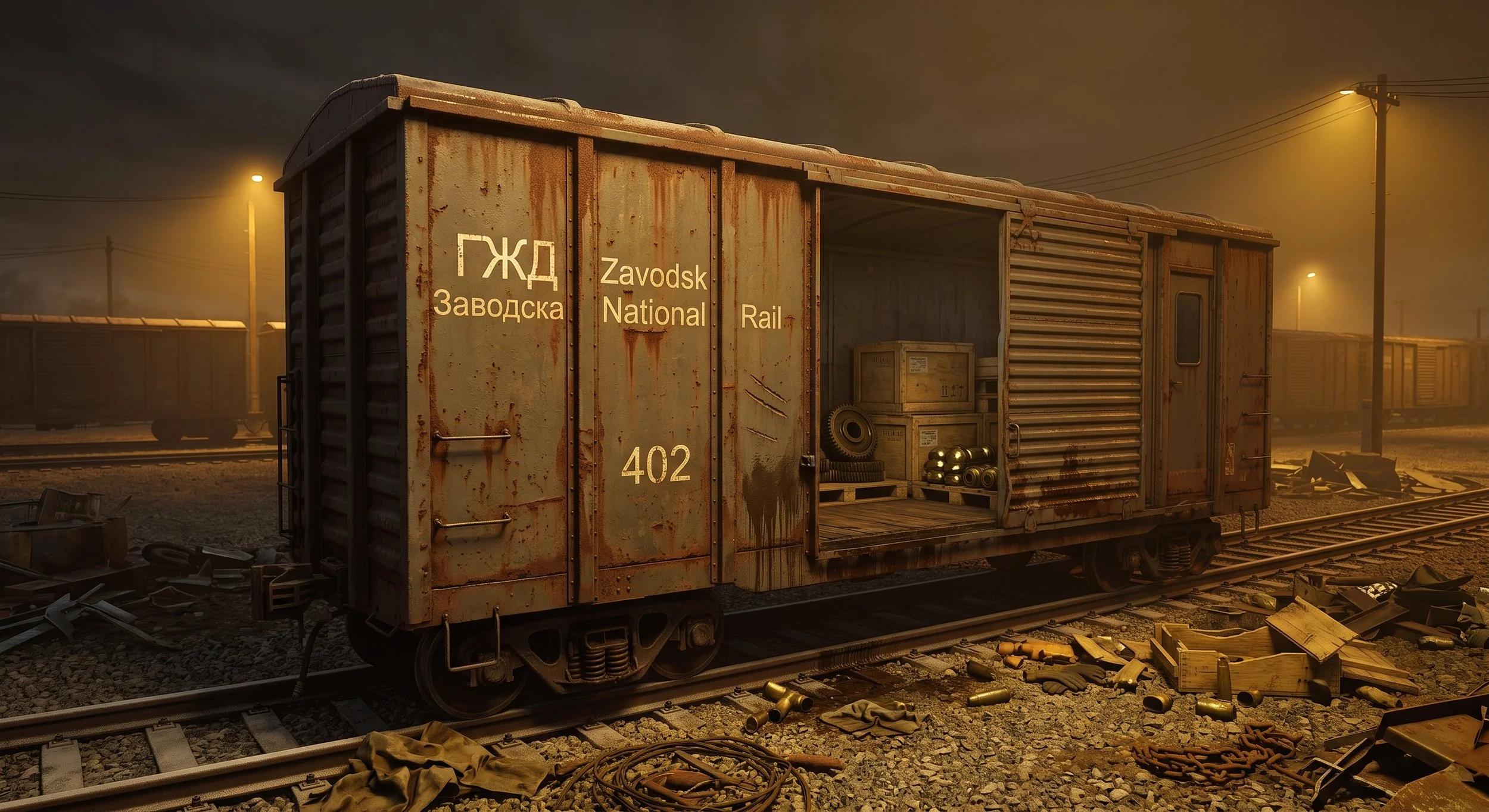
CHAPTER ONE: THE STRELKA SHIPMENT
Pavel Bortnik had been on the clock for twenty-three years and four months. He intended to die that way.
He was fifty-one, thick through the middle, with a clipboard permanently welded to his left hand. His mustache had survived two divorces and one civil war. On the afternoon of October 14th, he was inspecting Boxcar 402, recently arrived from the Strelka Railyard. It was loaded with heavy machine parts—gears the size of manhole covers and crates of brass fittings slick with preservation oil.
The first symptom was a sudden, metallic taste at the back of the throat. He stopped between the crates and spat onto the wooden floor.
“Fucking air quality,” he muttered. He pulled a pen and wrote on his pad:
Complaint re: ventilation in Sector 4. Escalate to maintenance.
The incident had happened 40 minutes earlier. A new hire—a pale kid from Strelka—had been assigned to help with the inventory. But the boy was a mess. He stood at the far end of the car, past the brass fittings, swaying, his weight shifting from foot to foot, his head dropping and rising. His mouth hung open, dark mucous running from his lower lip, and his eyes had gone white.
Pavel did not call a medic.
“Stand up,” Pavel barked in the official Sino-Zavodsk monotone. “You are on corporate time. This behavior is unauthorized. It is a violation of the conduct code.”
The kid’s head snapped toward him. He lunged with a wet hiss. Teeth sank deep into Pavel’s forearm, tearing through the heavy wool of his uniform sleeve and into the meat.
Pavel clocked the boy over the head with his heavy wooden clipboard, breaking the skin on the kid’s forehead. He grabbed the kid by the collar of his coveralls, damp and stinking of sweat, worse now with something underneath it he didn’t have a name for. With a grunt of effort, Pavel hauled the boy toward the open sliding door and shoved him out.
The kid hit the gravel of the yard with a thud. Pavel watched as the boy scrambled back to his feet, his movements twitching and erratic. The kid looked up, jaw working. Perhaps he was preparing a report of physical abuse to the central office.
Pavel didn’t care. I am the one who does the writing here, he thought.
He slid the heavy steel door shut with a clang, cutting off the sight of the boy. From the other side, a frantic, wet banging started against the metal, but Pavel simply turned his back on it.
He picked the clipboard back up and found his place on the manifest. Gears, brass fittings, all present, all accounted for. He logged the insubordinate worker—Strelka new hire, conduct violation, sent home—and kept working.
“Western drugs,” Pavel thought, his lip curling in disgust as he wrapped a greasy rag around his bleeding arm. “The Strelka youth have no discipline. They swallow narcotics and forget their quotas.”
By 18:20, his left arm felt hot and heavy. He told himself it was the cold.CHAPTER ONE: THE STRELKA SHIPMENT
Pavel Bortnik had been on the clock for twenty-three years and four months. He intended to die that way.
He was fifty-one, thick through the middle, with a clipboard permanently welded to his left hand. His mustache had survived two divorces and one civil war. On the afternoon of October 14th, he was inspecting Boxcar 402, recently arrived from the Strelka Railyard. It was loaded with heavy machine parts—gears the size of manhole covers and crates of brass fittings slick with preservation oil.
The first symptom was a sudden, metallic taste at the back of the throat. He stopped between the crates and spat onto the wooden floor.
“Fucking air quality,” he muttered. He pulled a pen and wrote on his pad:
Complaint re: ventilation in Sector 4. Escalate to maintenance.
The incident had happened 40 minutes earlier. A new hire—a pale kid from Strelka—had been assigned to help with the inventory. But the boy was a mess. He stood at the far end of the car, past the brass fittings, swaying, his weight shifting from foot to foot, his head dropping and rising. His mouth hung open, dark mucous running from his lower lip, and his eyes had gone white.
Pavel did not call a medic.
“Stand up,” Pavel barked in the official Sino-Zavodsk monotone. “You are on corporate time. This behavior is unauthorized. It is a violation of the conduct code.”
The kid’s head snapped toward him. He lunged with a wet hiss. Teeth sank deep into Pavel’s forearm, tearing through the heavy wool of his uniform sleeve and into the meat.
Pavel clocked the boy over the head with his heavy wooden clipboard, breaking the skin on the kid’s forehead. He grabbed the kid by the collar of his coveralls, damp and stinking of sweat, worse now with something underneath it he didn’t have a name for. With a grunt of effort, Pavel hauled the boy toward the open sliding door and shoved him out.
The kid hit the gravel of the yard with a thud. Pavel watched as the boy scrambled back to his feet, his movements twitching and erratic. The kid looked up, jaw working. Perhaps he was preparing a report of physical abuse to the central office.
Pavel didn’t care. I am the one who does the writing here, he thought.
He slid the heavy steel door shut with a clang, cutting off the sight of the boy. From the other side, a frantic, wet banging started against the metal, but Pavel simply turned his back on it.
He picked the clipboard back up and found his place on the manifest. Gears, brass fittings, all present, all accounted for. He logged the insubordinate worker—Strelka new hire, conduct violation, sent home—and kept working.
“Western drugs,” Pavel thought, his lip curling in disgust as he wrapped a greasy rag around his bleeding arm. “The Strelka youth have no discipline. They swallow narcotics and forget their quotas.”
By 18:20, his left arm felt hot and heavy. He told himself it was the cold.
CHAPTER TWO: THE DRAFT
The maintenance shed door was cracked open. A cool breeze blew through—Sergei’s one indulgence. His supervisor, Pavel Bortnik, hated open doors. They broke fire code policy, and he had written Sergei up for this offense on more than one occasion. But Sergei liked the cool air, so the door was cracked open tonight.
Pavel pushed the door wide and stepped inside.
Sergei was sitting on a crate, unlacing his left boot. It was a heavy, ankle-high piece of Zavodskian industrial leather, double-stitched with a thick, oil-resistant sole. The brass hooks were polished bright from years of use. It was a good boot—equipment a man took care of if he wanted to keep his toes in winter.
He looked up and sighed the sigh of a man who had been working since dawn.
“Pavel. I am off the clock in four minutes. Whatever it is, it can wait for tomorrow’s shift.”
Pavel did not answer. He shuffled forward. His arms were out slightly, his jaw working. The rag on his forearm was black and soaked.
Sergei wrinkled his nose. “Jesus, Pavel. You look like shit, and your breath stinks worse. Did you eat in cafeteria again? I told you that food is worse than garbage.”
Pavel kept coming. His eyes were going milky, the pupils spreading until they swallowed the iris. He reached for Sergei’s throat, fingers twitching like he was reaching for a pen.
Sergei stood up. “Get the fuck away from me. I work for you, I am not your mother.”
He planted both hands on Pavel’s chest and shoved—hard. Pavel’s heels caught on a loose floorboard. He went over backwards, landing flat on his back in the gravel outside the door.
Sergei stepped forward and slammed the door. The latch caught with a solid, final clack.
From outside came a low, wet scraping—fingernails on corrugated metal—followed by the heavy thump of a body trying to stand.
Sergei leaned his forehead against the metal. “Go home, Pavel. You are off the clock too.”
He waited until the scraping moved away into the dark.
Chapter Three: The Boxcar
Three weeks later, Pavel was still there.
Sergei found him on a cold afternoon in early November. Sergei was scavenging a stalled boxcar at the far end of the western yard. The car was full of Koltso Bling and Frietov—thousands of chocolate pucks and corn-chip bags left to sit.
Sergei had already eaten three Koltso Bling and was working on a fourth when the sliding door rattled.
Pavel stepped in.
He looked mostly intact, but his skin was grey. His uniform was shredded. His eyes were fully white now, but he still held that same familiar, bureaucratic reach. He saw Sergei and let out a dry, rattling hiss.
Sergei looked up from the open box of processed cakes, his mouth full of synthetic sugar.
“Still here, Pavel?” he said, his voice flat. “Most people take the hint.”
Pavel lurched forward. He was fast, his movements jerky and wrong.
Sergei just sighed, stood, and gripped his 36-inch pipe wrench. As Pavel lunged to bite, Sergei swung the heavy iron tool in a short arc.
The flat head of the wrench caught Pavel square in the mouth with a crack.
Pavel spun and hit the floor. When he scrambled back up, his face was ruined. The jaw had been completely unhinged by the force of the blow. A single grey tendon kept it attached. The lower jaw now hung at an angle, swinging with every step. His teeth clacked against his chest, his mouth unable to close.
Pavel kept coming anyway. His arms were still outstretched. He was a wind-up toy that did not know the spring was broken.
Sergei stepped aside. Pavel shuffled past him and hit the far wall of the boxcar. He slowly turned around, the jaw swinging by that single grey thread.
Sergei watched the ruined thing. “You’re off the clock now, Pavel,” he said quietly. “You just don’t know it.”
He picked up another Koltso Bling and took a bite.
He left the door open.
Behind him, the thing that had once been his supervisor clicked and clacked—trying one more time to do its job.